Jawahar Navodaya Vidyalaya, Jashpur
About the School
Established under the vision of former Prime Minister Shri Rajiv Gandhi, Navodaya Vidyalayas aim to provide quality modern education through residential, co-educational institutions across India. Jawahar Navodaya Vidyalaya, Jashpur (Kunkuri) was established in 2006 and is located at its permanent campus in Dhorhidand, Kunkuri, offering a nurturing environment for holistic student development.
Principal’s Message
As the Principal of Jawahar Navodaya Vidyalaya, Kunkuri, District Jashpur, I extend a warm welcome to our Vidyalaya website. Our institution has been a guiding light in shaping not only responsible citizens but also compassionate human beings, with the dedicated efforts of our teaching and non-teaching staff.
At JNV Kunkuri, we follow a student-centric approach that provides meaningful and enriching educational experiences. We strive to create a dynamic learning environment that nurtures curiosity, creativity, and a passion for knowledge, while addressing the evolving needs of our learners.
Our commitment is to develop confident, sensitive, and socially responsible individuals. We focus on the holistic growth of every student, encouraging them to excel academically while also developing strong values and life skills.
I feel immense joy and pride in the presence and achievements of our students. The continuous support of parents, the inspiration from our mentors, and the dedication of our staff motivate us to work together, share knowledge, and build a vibrant learning community that drives excellence.
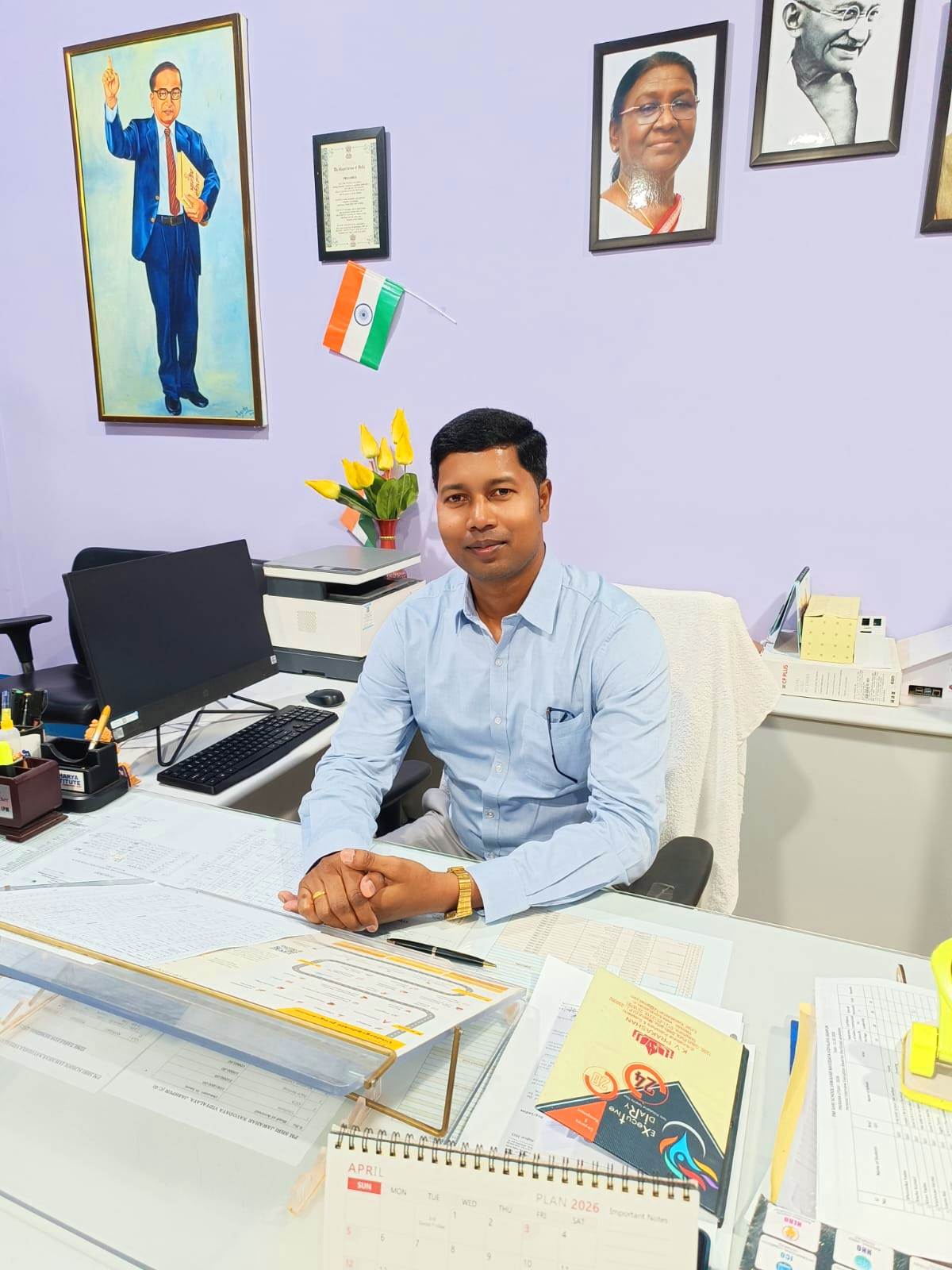
Amit Horo, Principal I/c
Navodaya Vidyalaya Scheme
The National Policy on Education-1986 envisaged setting up of residential schools, to be called Jawahar Navodaya Vidyalayas, that would bring out the best of rural talent.
It was felt that children with special talent or aptitude should be provided opportunities to progress at a faster pace by making good quality education available to them irrespective of their capacity to pay for it. Such education would enable students from rural areas to compete with their urban counterparts on an equal footing; seamlessly assimilating and intefrating them into the mainstream of the society.
The Navodaya Vidyalaya System which began as a unique experiment, is today unparalleled in the annals of school education in India and elsewhere. Its significance lies in the selection of talented rural children as the target group and the attempt to provide them quality education comparable to the best in a residential school system.
Objectives of Navodaya Vidyalaya Samiti
- To establish ,endow, maintain, control,and manage schools (hereinafter called the ‘Navodaya Vidyalaya’) and to do all acts and things necessary for or conducive to the promotion of such schools which will have the following objectives:
- To provide good quality modern education-including a strong component of culture inculcation of values, awareness of the environment, adventure activities and physical education- to the talented children predominantly from the rural areas without regard to their family’s socio-economic condition.
- To provide facilities, at a suitable stage, for instruction through a common medium, viz., Hindi and English, all over the country.
- Offer a common core-curriculum to ensure comparability in standards and to facilitate and understand the common and composite heritage of our people.
- To progressively bring students from one part of the country to another in each school to promote national integration and enrich the social content.
- To serve as a focal point for improvement in quality of school education through training of teachers in live situations and sharing of experiences and facilities.
- To establish, develop, maintain and manage hostels for the residence of students of Navodaya Vidyalayas.
- To aid, establish and conduct other institutions as may be required for the furtherance of the Society’s objects in any part of India
- To do all such things as may be considered necessary, incidental or conducive to the attainment of all or any of the objects of the society.
Salient Features of Navodaya Vidyalayas
Navodaya Vidyalayas draw their students strength from talented children, selected on the basis of a merit test, called the Jawahar Navodaya Vidyalaya Selection Test, designed, developed and conducted initially by NCERT and now by CBSE. The test is held annually on an All India basis and at block and district levels. The test is objective, class neutral and is so designed as to ensure that rural children are not at a disadvantage while attempting it.
Admission in Jawahar Navodaya Vidyalayas is primarily for children from the rural areas, with provision of at least 75% seats for rural children. Seats are reserved for children from SC& ST communities in proportion to their population in the district but not less than the national average. 27% reservation is provided to the OBC students over and above reservation of SCs& STs. 1/3 of the seats are filled by girl students. 3% of the seats are reserved for disabled children.
Navodaya Vidyalayas are affiliated to CBSE and provide free residential quality education to talented children from Class-VI to XII. Entry into Navodaya Vidyalayas is made in Class-VI with lateral entry in Classes- IX & XI. Each Navodaya Vidyalaya is a co-educational residential institution providing free boarding and lodging, free school uniforms, text books, stationery and to and fro rail / bus fare to students. However, a nominal fee @ Rs.600/- per month is charged from the students of Classes-IX to XII as Vidyalaya Vikas Nidhi except from the students of following exempted category.
- All students from Class-VI to VIII.
- All Girl students.
- Students belonging to SC Category.
- Students belonging to ST Category.
- Wards of Below Poverty Line families.
In respect of wards of Government employees other than exempted category, VVN is charged either @ Rs.1500/- per month or actual Children Education Allowance received by the parent per month whichever is less.
The Scheme of Navodaya Vidyalayas provides for implementation of the Three Language Formula. The third language taught in Hindi speaking districts is linked to the migration of students. All Navodaya Vidyalayas follow the Three Language Formula i.e. Regional language, English and Hindi.
The medium of instruction will be mother-tongue/regional language upto VII or VIII Class. Thereafter the common medium would be Hindi/English in all Navodaya Vidyalayas.
Navodaya Vidyalayas aim at inculcating values of national integration through migration scheme. Migration is an inter-regional exchange of students between Hindi and Non-Hindi speaking districts, which takes place for one academic year in Class-IX. Efforts are made to promote better understanding of the unity in diversity and to develop and promote understanding of the rich cultural heritage through various activities.
Navodaya Vidyalayas are located in rural areas across the country. For the setting up of a Navodaya Vidyalaya, the State Govt. has to provide cost free land for construction of school building at permanent site and rent free temporary building.
Regular training workshops are organized for teachers to enhance their ICT skills and promote effective teaching. Teachers are trained to use smart boards, laptops, tablets, and digital resources such as NROER, CIET, and NCERT to enrich classroom learning.
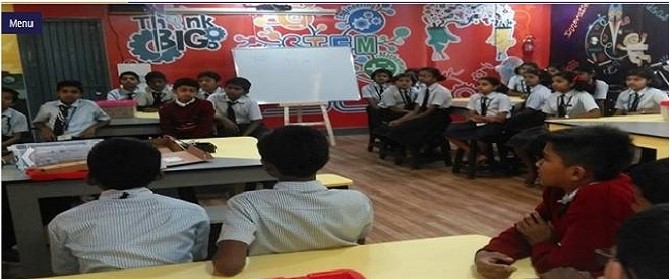
Smart Classrooms equipped with CBSE-aligned digital learning software are used for students from Classes VI to X, providing interactive study material and question banks through a structured timetable.
ICT tools are also integrated into assessments, project work, and language learning. Students use digital platforms for speaking and listening assessments, online tests, project preparation, and access to higher-order thinking resources, ensuring improved learning outcomes and quality education.
JNV Ratnagiri provides a safe, disciplined, and nurturing residential environment.
Separate hostels for boys and girls
Nutritious and hygienic meals
24×7 student supervision
Medical care and wellness support
Co-Curricular Activities (CCA) play a vital role in the holistic development of students by complementing academic learning. At Jawahar Navodaya Vidyalayas, CCA help enhance communication, creativity, leadership, teamwork, and confidence. Activities such as quizzes, debates, recitations, speeches, drama, and inter-house competitions are conducted throughout the academic year as per a structured CCA calendar.
Various clubs including Eco, Literary, Science, Mathematics, Cultural, Arts, Music, Health & Wellness, and Language clubs provide students with opportunities to explore their talents and interests. Through these activities and the celebration of regional, religious, and national festivals, JNVs promote national integration, cultural harmony, and a spirit of unity among students.
Admission in Jawahar Navodaya Vidyalaya is made on the basis of a Selection Test, designed and conducted by the CBSE. The test is called the Jawahar Navodaya Vidyalaya Selection Test (JNVST). It is of non-verbal nature, class-neutral and designed so as to ensure that talented children from rural areas are able to compete without facing any disadvantage. Special care is taken to ensure that children from far flung areas get admission forms free of cost, without any difficulty. Sufficient publicity is done through Doordarshan, All India Radio, local newspapers, pamphlets, Vidyalaya websites and through visits of Principals and teachers of Navodaya Vidyalayas to the local schools of the district.
Add Your Heading Text Here